Recombinant Mouse C-X-C motif chemokine 14 protein (Cxcl14)
In Stock-
中文名稱:Recombinant Mouse C-X-C motif chemokine 14 protein(Cxcl14) (Active)
-
品名簡稱:Recombinant Mouse Cxcl14 protein (Active)
-
貨號:CSB-AP001181MO
-
說明書:
-
規(guī)格:¥852
-
圖片:
-
-
其他:
產(chǎn)品詳情
-
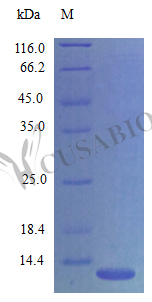
純度:>95% as determined by SDS-PAGE.
-
內(nèi)毒素:Less than 1.0 EU/μg as determined by LAL method.
-
生物活性:Fully biologically active when compared to standard. The biological activity determined by a chemotaxis bioassay using human monocytes is in a concentration range of 1.0-10 ng/ml.
-
基因名:
-
Uniprot No.:
-
別名:Cxcl14; Bmac; Kec; Ks1; Mip2g; Scyb14C-X-C motif chemokine 14; B-cell and monocyte-activating chemokine; Chemokine BRAK; Kidney-expressed chemokine CXC; MIP-2G; Small-inducible cytokine B14
-
種屬:Mus musculus (Mouse)
-
蛋白長度:Full Length of Mature Protein
-
來源:E.Coli
-
分子量:9.4 kDa
-
表達區(qū)域:23-99aa
-
氨基酸序列SKCKCSRKGP KIRYSDVKKL EMKPKYPHCE EKMVIVTTKS MSRYRGQEHC LHPKLQSTKR FIKWYNAWNE KRRVYEE
-
蛋白標簽:Tag-Free
-
產(chǎn)品提供形式:Liquid or Lyophilized powder
-
緩沖液:0.2 μm filtered PBS, pH 7.4 ,lyophilized
-
儲存條件:Store at -20°C/-80°C upon receipt, aliquoting is necessary for mutiple use. Avoid repeated freeze-thaw cycles.
-
保質(zhì)期:The shelf life is related to many factors, storage state, buffer ingredients, storage temperature and the stability of the protein itself.
Generally, the shelf life of liquid form is 6 months at -20°C/-80°C. The shelf life of lyophilized form is 12 months at -20°C/-80°C. -
貨期:5-10 business days
-
Datasheet & COA:Please contact us to get it.
產(chǎn)品評價

相關(guān)產(chǎn)品
靶點詳情
-
功能:Chemotactic for CESS B-cells and THP-1 monocytes, but not T-cells.
-
基因功能參考文獻:
- Platelets are a relevant source of CXCL14. Platelet-derived CXCL14 at the site of vascular lesions might play an important role in vascular repair/regeneration. PMID: 28359053
- CXCL14 Tg mice showed a suppressed rate of carcinogenesis, decreased tumour volume, and reduced pulmonary metastasis, as well as an increased survival rate of mice following tumour cell injection. PMID: 25765541
- CXCL14 does not seem to play a pivotal role during influenza and Escherichia coli infections of the lung. PMID: 25313607
- CXCL14 was able to promote bone metastasis through enhancement of cancer cell tropism to the bone and/or recruitment of bone marrow cells around metastatic cancer cells. PMID: 24534874
- In conclusion, our results suggested the important function of Cxcl14 in uNK cells and the proper level of Cxcl14 protein were required to recruit NK cells to pregnant uterus. PMID: 23688424
- the transient expression of CXCL14 by Purkinje cells in the developing cerebellum, suggesting that it must be involved in the postnatal maturation of the cerebellum PMID: 22843118
- CXCL14 may play an important role in central nervous system regulation of feeding behavior PMID: 20428232
- Study identifies CXCL14 as a novel marker of tendon connective tissue. PMID: 21038449
- Murine CXCL14 is dispensable for the homeostatic recruitment of antigen-presenting cells toward the periphery and for LC functionality. PMID: 17130243
- CXCL14 is a critical chemoattractant of white adipose tissue macrophages and a novel regulator of glucose metabolism that functions mainly in skeletal muscle. PMID: 17724031
- These results suggest that CXCL14 plays a causal role in high-fat diet-induced obesity. PMID: 17971304
- Data suggest that despite the structural homology and similarity in tissue distribution of human and murine CXCL14, distinct differences point to diverse, species-specific needs for CXCL14 in epithelial immunity. PMID: 18809336
- findings demonstrate that early overexpression of PMP22 in a mouse model of Charcot-Marie-Tooth disease type 1A results in a strong up-regulation of CXCL14 which seems to play a novel regulatory role in Schwann cell differentiation PMID: 19111616
- CXCL14 is an important paracrine/autocrine modulator regulating trophoblast outgrowth at the maternal-fetal interface during the process of pregnancy establishment. PMID: 19626669
- These data indicate the possibility that BRAK expression inhibits tumor cell establishment by regulating interactions between tumor stem cells and NK cells and/or suppressing formation of tumor microvessels. PMID: 19887729
顯示更多
收起更多
-
亞細胞定位:Secreted.
-
蛋白家族:Intercrine alpha (chemokine CxC) family
-
組織特異性:Highly expressed in brain, lung, ovary, muscle and in kidney and liver parenchyma, and at lower levels in bone marrow.
-
數(shù)據(jù)庫鏈接:
Most popular with customers
-
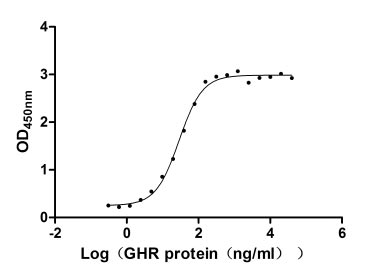
Recombinant Human Growth hormone receptor (GHR), partial (Active)
Express system: Mammalian cell
Species: Homo sapiens (Human)
-
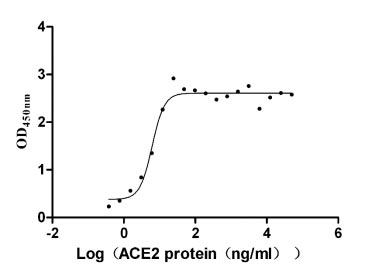
Recombinant Paguma larvata Angiotensin-converting enzyme 2 (ACE2), partial (Active)
Express system: Mammalian cell
Species: Paguma larvata (Masked palm civet)
-
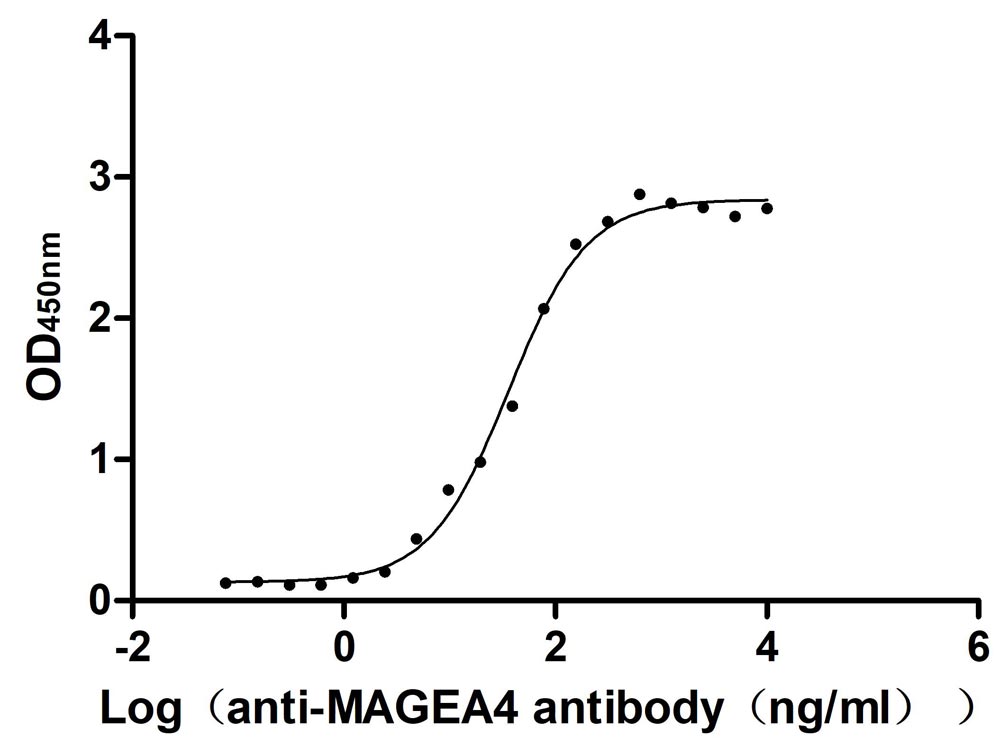
Recombinant Human Melanoma-associated antigen 4 (MAGEA4) (Active)
Express system: Mammalian cell
Species: Homo sapiens (Human)
-
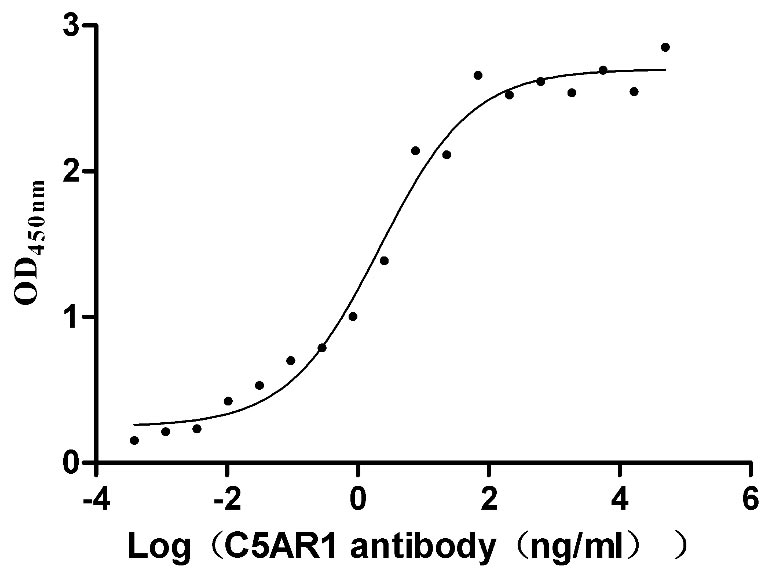
Recombinant Human C5a anaphylatoxin chemotactic receptor 1 (C5AR1)-VLPs (Active)
Express system: Mammalian cell
Species: Homo sapiens (Human)
-
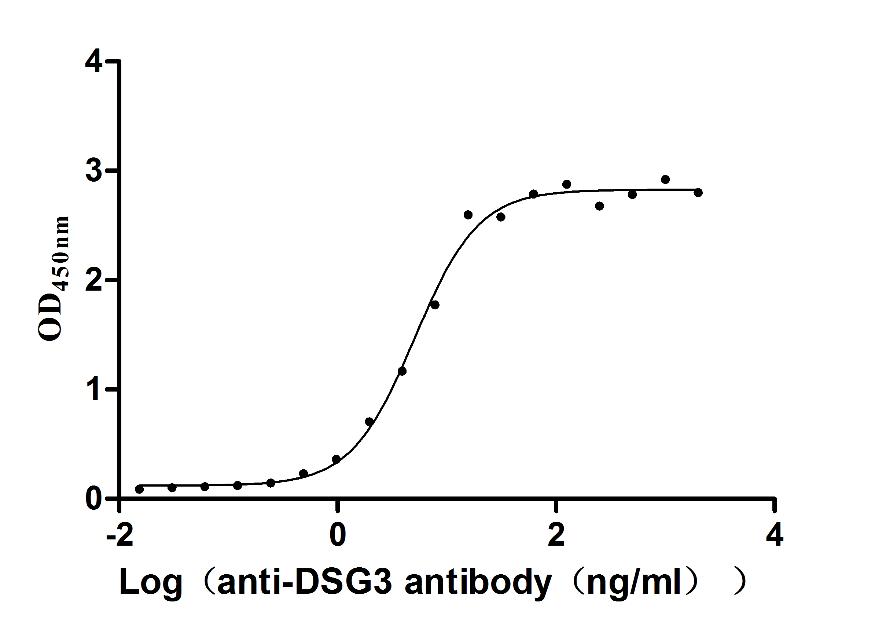
Recombinant Human Desmoglein-3 (DSG3), partial (Active)
Express system: Baculovirus
Species: Homo sapiens (Human)
-
Recombinant Human C-C chemokine receptor type 8 (CCR8)-VLPs (Active)
Express system: Mammalian cell
Species: Homo sapiens (Human)
-
Recombinant Human Urokinase-type plasminogen activator(PLAU) (Active)
Express system: Mammalian cell
Species: Homo sapiens (Human)