Recombinant Streptococcus sp Streptokinase G protein (skg)
In Stock-
中文名稱:Recombinant Streptococcus sp Streptokinase G protein(skg) (Active)
-
品名簡稱:Recombinant Streptococcus sp. skg protein (Active)
-
貨號:CSB-AP000171SNC
-
說明書:
-
規格:¥1056
-
圖片:
-
-
其他:
產品詳情
-
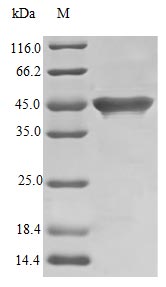
純度:>97% as determined by SDS-PAGE.
-
內毒素:Less than 1.0 EU/μg as determined by LAL method.
-
生物活性:Fully biologically active when compared to standard. The specific activity determined by fibrining lysis in agarose plate is 8.0x10⁴ IU/mg.
-
基因名:skg
-
Uniprot No.:
-
別名:skg; Streptokinase G
-
種屬:Streptococcus sp. (strain 19909)
-
蛋白長度:Full Length of Mature Protein
-
來源:E.Coli
-
分子量:47.3 kDa
-
表達區域:27-440aa
-
氨基酸序列IAGPEWLLDR PSVNNSQLVV SVAGTVEGTN QDISLKFFEI DLTSRPAHGG KTEQGLSPKS KLFATDSGAM PHKLEKADLL KAIQEQLIAN VHSNDDYFEV IDFASDATIT DRNGKVYFAD KDGSVTLPIQ PVQEFLLKGH VRVRPYKEKP VQNQAKSVDV EYTVQFTPLN PDDDFRPALK DTKLLKTLAI GDTITSQELL AQAQSILNKN HPGYTIYERD SSIVTHDNDI FRTILPMDQE FTYHVKNREQ AYRINKKSGL NEEINNTDLI SEKYYVLKKG EKPYDPFDRS HLKLFTIKYV DVNTNELLKS EQLLTASERN LDFRDLYDPR DKAKLLYNNL DAFGIMDYTL TGKVEDNHDD TNRIITVYMG KRPEGENASY HLAYDKDRYT EEEREVYSYL RYTGTPIPDN PNDK
-
蛋白標簽:Tag-Free
-
產品提供形式:Liquid or Lyophilized powder
-
緩沖液:0.2 μm filtered PBS, pH 7.4 ,lyophilized
-
儲存條件:Store at -20°C/-80°C upon receipt, aliquoting is necessary for mutiple use. Avoid repeated freeze-thaw cycles.
-
保質期:The shelf life is related to many factors, storage state, buffer ingredients, storage temperature and the stability of the protein itself.
Generally, the shelf life of liquid form is 6 months at -20°C/-80°C. The shelf life of lyophilized form is 12 months at -20°C/-80°C. -
貨期:5-10 business days
-
Datasheet & COA:Please contact us to get it.
產品評價

相關產品
靶點詳情
-
功能:This protein is not a protease, but it activates plasminogen by complexing with it. As a potential virulence factor, it is thought to prevent the formation of effective fibrin barriers around the site of infection, thereby contributing to the invasiveness of the cells.
Most popular with customers
-
Recombinant Human Mucin-16 (MUC16), partial (Active)
Express system: Mammalian cell
Species: Homo sapiens (Human)
-
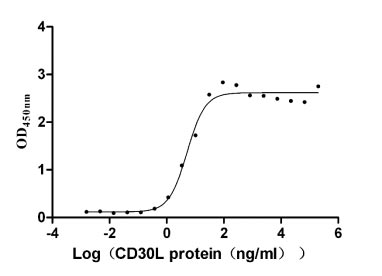
Recombinant Human Tumor necrosis factor ligand superfamily member 8 (TNFSF8), partial (Active)
Express system: Mammalian cell
Species: Homo sapiens (Human)
-
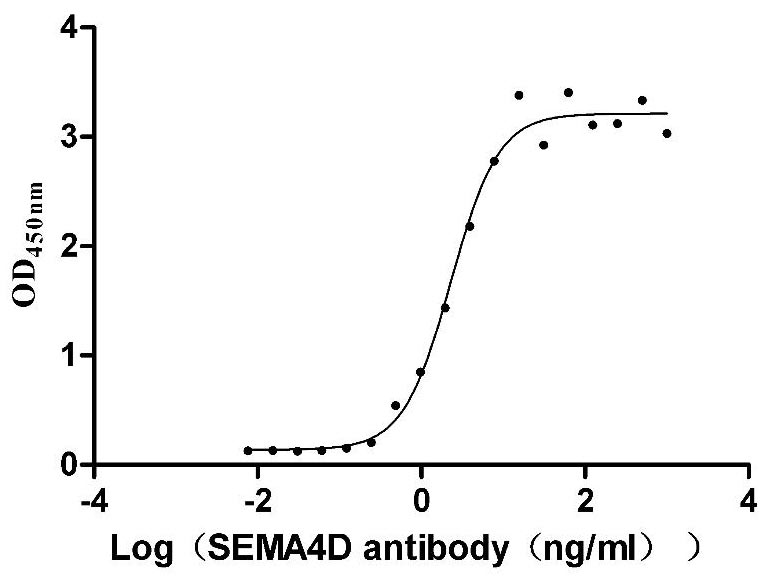
Recombinant Macaca mulatta Semaphorin-4D isoform 1 (SEMA4D), partial (Active)
Express system: Mammalian cell
Species: Macaca mulatta (Rhesus macaque)
-
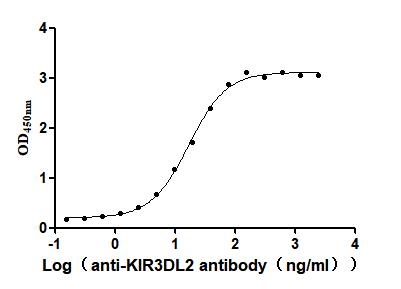
Recombinant Human Killer cell immunoglobulin-like receptor 3DL2 (KIR3DL2), partial (Active)
Express system: Mammalian cell
Species: Homo sapiens (Human)