Recombinant Human BRCA1-associated RING domain protein 1 (BARD1), partial
-
中文名稱:Recombinant Human BRCA1-associated RING domain protein 1(BARD1),partial
-
貨號:CSB-YP860351HU1
-
規格:
-
來源:Yeast
-
其他:
-
中文名稱:Recombinant Human BRCA1-associated RING domain protein 1(BARD1),partial
-
貨號:CSB-EP860351HU1
-
規格:
-
來源:E.coli
-
其他:
-
中文名稱:Recombinant Human BRCA1-associated RING domain protein 1(BARD1),partial
-
貨號:CSB-EP860351HU1-B
-
規格:
-
來源:E.coli
-
共軛:Avi-tag Biotinylated
E. coli biotin ligase (BirA) is highly specific in covalently attaching biotin to the 15 amino acid AviTag peptide. This recombinant protein was biotinylated in vivo by AviTag-BirA technology, which method is BriA catalyzes amide linkage between the biotin and the specific lysine of the AviTag.
-
其他:
-
中文名稱:Recombinant Human BRCA1-associated RING domain protein 1(BARD1),partial
-
貨號:CSB-BP860351HU1
-
規格:
-
來源:Baculovirus
-
其他:
-
中文名稱:Recombinant Human BRCA1-associated RING domain protein 1(BARD1),partial
-
貨號:CSB-MP860351HU1
-
規格:
-
來源:Mammalian cell
-
其他:
產品詳情
-
純度:>85% (SDS-PAGE)
-
基因名:
-
Uniprot No.:
-
別名:BARD-1; Bard1; BARD1_HUMAN; BRCA1 associated RING domain 1; BRCA1 associated RING domain gene 1; BRCA1 associated RING domain protein 1; BRCA1-associated RING domain protein 1
-
種屬:Homo sapiens (Human)
-
蛋白長度:Partial
-
蛋白標簽:Tag?type?will?be?determined?during?the?manufacturing?process.
The tag type will be determined during production process. If you have specified tag type, please tell us and we will develop the specified tag preferentially. -
產品提供形式:Lyophilized powder
Note: We will preferentially ship the format that we have in stock, however, if you have any special requirement for the format, please remark your requirement when placing the order, we will prepare according to your demand. -
復溶:We recommend that this vial be briefly centrifuged prior to opening to bring the contents to the bottom. Please reconstitute protein in deionized sterile water to a concentration of 0.1-1.0 mg/mL.We recommend to add 5-50% of glycerol (final concentration) and aliquot for long-term storage at -20℃/-80℃. Our default final concentration of glycerol is 50%. Customers could use it as reference.
-
儲存條件:Store at -20°C/-80°C upon receipt, aliquoting is necessary for mutiple use. Avoid repeated freeze-thaw cycles.
-
保質期:The shelf life is related to many factors, storage state, buffer ingredients, storage temperature and the stability of the protein itself.
Generally, the shelf life of liquid form is 6 months at -20°C/-80°C. The shelf life of lyophilized form is 12 months at -20°C/-80°C. -
貨期:Delivery time may differ from different purchasing way or location, please kindly consult your local distributors for specific delivery time.Note: All of our proteins are default shipped with normal blue ice packs, if you request to ship with dry ice, please communicate with us in advance and extra fees will be charged.
-
注意事項:Repeated freezing and thawing is not recommended. Store working aliquots at 4°C for up to one week.
-
Datasheet :Please contact us to get it.
產品評價

相關產品
靶點詳情
-
功能:E3 ubiquitin-protein ligase. The BRCA1-BARD1 heterodimer specifically mediates the formation of 'Lys-6'-linked polyubiquitin chains and coordinates a diverse range of cellular pathways such as DNA damage repair, ubiquitination and transcriptional regulation to maintain genomic stability. Plays a central role in the control of the cell cycle in response to DNA damage. Acts by mediating ubiquitin E3 ligase activity that is required for its tumor suppressor function. Also forms a heterodimer with CSTF1/CSTF-50 to modulate mRNA processing and RNAP II stability by inhibiting pre-mRNA 3' cleavage.
-
基因功能參考文獻:
- Study shows that tamoxifen-resistant breast cancer cells are resistant to DNA-damaging chemo- and radiotherapy because of upregulated BARD1 and BRCA1, which is caused by activated PI3K/AKT pathway. PMID: 29686231
- The results reveal new information for the manner in which full-length BRCA1 engages its binding partner, BARD1, under oxidative stress conditions. PMID: 28262780
- BARD1 RING domain is critical to BRCA1/BARD1 binding to nucleosomes and hence to ubiquitylation of histone H2A and also critical to transcriptional repression of BRCA1-regulated genes active in estrogen metabolism. PMID: 29367421
- BARD1delta binds more efficiently than BARD1 to telomere binding proteins and causes their depletion from telomeres, leading to telomere and chromosomal instability and tumor cell cycle arrest. PMID: 28030839
- BRCA1-BARD1 mutants with weakened RAD51 interactions show compromised DNA joint formation and impaired mediation of homologous recombination and DNA repair in cells; results identify a late role of BRCA1-BARD1 in homologous recombination, an attribute of the tumour suppressor complex that could be targeted in cancer therapy PMID: 28976962
- variants in BARD1 were associated with moderate risks of breast cancer. PMID: 28418444
- NPM1 downregulation by P-STAT5 is mediated by impairing the BRCA1-BARD1 ubiquitin ligase, which controls the stability of NPM1. In turn, decreased NPM1 levels led to suppression of p53 expression, resulting in enhanced cell survival. PMID: 28005077
- In MCF-7 cells BARD1 variants do vary considerably their cellular distribution and in their ability to influence apoptotic response to cisplatin. PMID: 27477900
- substitutions that create a structurally intact BRCA1/BARD1 heterodimer that is inactive in vitro with all E2 enzymes. Other substitutions in BRCA1 or BARD1 RING domains result in hyperactivity, revealing that both proteins have evolved attenuated activity. Loss of attenuation results in decreased product specificity, providing a rationale for why nature has tuned BRCA1 activity. PMID: 27977889
- Findings suggest that the study of AtROW1 in plant may provide a model for elucidating the functional mechanism of BARD1 in mammals. PMID: 27502904
- BRCA1-BARD1 ligase activity and subsequent SMARCAD1-dependent chromatin remodeling are critical regulators of DNA repair in cancer cells. PMID: 27239795
- Results suggest that BRCA1-associated RING domain protein 1 (BARD1) rs7585356 G>A polymorphism may be associated with nephroblastoma risk. PMID: 28161399
- BARD1 rs6435862 T>G and rs3768716 A>G single nucleotide polymorphisms contribute to increased susceptibility to neuroblastoma, especially for children at age >/=12 months in a Southern Chinese population. PMID: 26941572
- BRCA pathway germline mutation (in BRCA1, BRCA2 or BARD1 genes) was present in 10 of the 42 investigated triple-negative breast cancer patients rendering them susceptible to homologous recombination deficiency. PMID: 26010302
- Study presents four different pathogenic BARD1 variants identified in ovarian cancer patients. Three of them result in incorrect splicing of the corresponding exons, which may prompt expression of specific BARD1 isoforms and carcinogenesis. PMID: 26329992
- Suggest BARD1 as a driver of proliferation and of pulmonary fibrosis pathogenesis. PMID: 26415510
- a role for the BRCT domain in stimulating BARD1 nuclear export and mitochondrial localization, and in assembling mitochondrial BARD1/p53 complexes to regulate specific activities such as apoptotic function. PMID: 26022179
- Mutations do not contribute substantially (>> 10% of the total BARD1 mutations) to BARD1 sequence variation and, subsequently, to familial breast and/or ovarian cancer aggregation. PMID: 25994375
- BARD1 interacts with H3K9me2 through HP1 and plays a critical role in retention of a BRCA1/BARD1 complex at the site of DNA damage. PMID: 25634209
- FOXK2 might act as a negative regulator of ERalpha, and its association with both ERalpha and BRCA1/BARD1 could lead to the down-regulation of ERalpha transcriptional activity, effectively regulating the function of ERalpha. PMID: 25740706
- Increased expression of the BARD1 protein, with its ubiquitin ligase function, was associated with significantly improved overall and disease-free survival, which has yet to be documented for ACC. PMID: 25657202
- BARD1 long non-coding RNA is overexpressed in neoplasms. PMID: 25008968
- HDACi (histone deacetylase inhibitor) Vorinostat reduces BARD1 mRNA levels by increasing miR-19a and miR-19b expression levels. PMID: 24349422
- BARD1 is frequently overexpressed in brain metastases from breast cancer and may constitute a mechanism to overcome reactive oxygen species-mediated genotoxic stress in the metastatic brain. PMID: 24948741
- SNP sites rs2229571 and rs1048108 of BARD1 are associated with a lower risk of breast cancer but not rs2070094. PMID: 23966609
- BARD1 is a major gentic contributor to neuroblastoma. PMID: 23222812
- Data indicate that four nsSNPs, rs4986841, rs111367604, rs13389423 and rs139785364, were identified as deleterious, reducing the protein stability of BARD1, and these SNPs can be used for the larger population-based studies of female cancers. PMID: 23056176
- SNPs of Pro24Ser(C/T), Arg378Ser (G/C) and Val507Met (G/A) of BARD1 gene are associated with significantly decreased risk of early-onset breast cancer in Uygur women in Xinjiang. PMID: 22883453
- It is concluded that a proportion of patients with therapy related myeloid neoplasms carry cancer susceptibility mutations,including BARD1 mutations, which is likely to contribute to therapy related leukaemogenesis. PMID: 22652532
- Our results suggest that BARD1 557Ser and XRCC3 241Met may play roles in BC risk in women with a strong family history of breast cancer (BC). PMID: 22544576
- Single-nucleotide polymorphisms in BARD1 gene is associated to neuroblastoma. PMID: 22328350
- BARD1 mutations may be regarded as cancer risk alleles and warrant further investigation to determine their actual contribution to non-BRCA1/2 breast and ovarian cancer families. PMID: 21344236
- BARD1 isoforms might be involved in tumor initiation and invasive progression and might represent a novel prognostic marker for non-small cell lung cancer. PMID: 21815143
- our findings identify BARD1beta as an oncogenic driver of high-risk neuroblastoma tumorigenesis PMID: 22350409
- the BRCA1/BARD1 ubiquitin ligase complex was found to enhance SAFB protein expression and induce Tel2 nuclear translocation PMID: 21950761
- Data suggest that BARD1 regulation is an important pathway in colon cancer and that the BARD1 full-length protein may be a useful marker to improve risk stratification in colon cancer patients. PMID: 21693656
- suggests that BARD1 Cys557Ser mutation is not associated with increased breast cancer risk PMID: 21809034
- Genetic variation at BARD1 is not associated with breast cancer risk in BRCA1 or BRCA2 mutation carriers. PMID: 21393566
- Data show that inhibition of BRCA1/BARD1 downregulation is accompanied by the unscheduled recruitment of both proteins to chromatin along with Rad51. PMID: 21103343
- a tumor with homozygous deletion of BARD1 displayed a BRCA1-mutated expression profile; BARD1 might be a breast cancer susceptibility gene with BRCA1-like expression profile PMID: 20842729
- Common variations in BARD1 contribute to the etiology of the aggressive and most clinically relevant subset of human neuroblastoma. PMID: 19412175
- analysis of cancer predisposing missense and protein truncating BARD1 mutations in non-BRCA1 or BRCA2 breast cancer families PMID: 20077502
- BRCA1 and BARD1 are required for estrogen receptor alpha ubiquitination and degradation, and repression of either one leads to ERalpha accumulation, suggesting a feedback loop between BRCA1-BARD1 and estrogen receptor alpha PMID: 20060929
- The science behind BARD1 and its role in breast and ovarian cancer is explained in this article. PMID: 19959210
- Four genes encoding BRCA1-interacting proteins were analyzed in a cohort of 96 breast cancer individuals from high-risk non-BRCA1/BRCA2 French Canadian families. PMID: 19197335
- BARD1 phosphorylation, expression and localisation patterns are regulated in the nucleus and at mitochondria in response to different forms of DNA damage. PMID: 19796682
- Germline mutations of BARD1 have been detected in hereditary breast and breast/ovarian cancers negative for BRCA1 and BRCA2 alterations. PMID: 11807980
- BARD1 induces BRCA1 intranuclear foci formation by increasing RING-dependent BRCA1 nuclear import and inhibiting BRCA1 nuclear export PMID: 11925436
- Autoubiquitination of the BRCA1*BARD1 RING ubiquitin ligase. PMID: 11927591
- It is structurally homologous to BRCA1 (it shares the conserved RING finger and BRCT domains); may be involved in tumor suppression because BARD1-BRCA1 complexes in ubiquination of RNA Pol II and BARD1 interacts with CstF-50 (inhibiting mRNA processing). PMID: 11943588
顯示更多
收起更多
-
亞細胞定位:Nucleus. Note=During S phase of the cell cycle, colocalizes with BRCA1 into discrete subnuclear foci. Can translocate to the cytoplasm. Localizes at sites of DNA damage at double-strand breaks (DSBs); recruitment to DNA damage sites is mediated by the BRCA1-A complex.
-
數據庫鏈接:
Most popular with customers
-
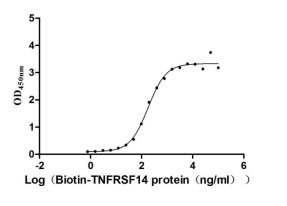
Recombinant Human B- and T-lymphocyte attenuator (BTLA), partial (Active)
Express system: Mammalian cell
Species: Homo sapiens (Human)
-
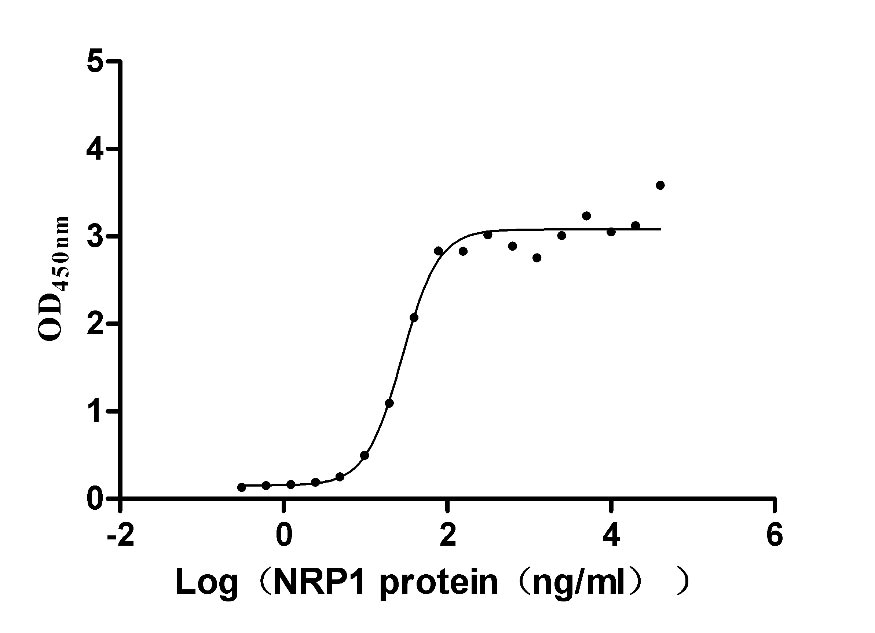
Recombinant Human Neuropilin-1 (NRP1) (Active)
Express system: Mammalian cell
Species: Homo sapiens (Human)
-
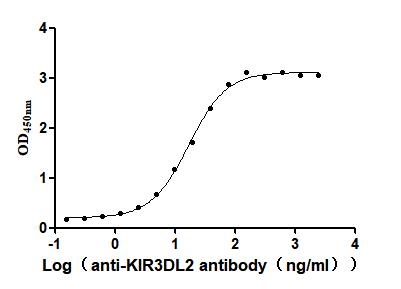
Recombinant Human Killer cell immunoglobulin-like receptor 3DL2 (KIR3DL2), partial (Active)
Express system: Mammalian cell
Species: Homo sapiens (Human)
-

Recombinant DT3C (Diphtheria toxin & spg 3C domain) for Antibody Internalization Assay (Active)
Express system: E.coli
Species: N/A