
Recombinant Human Protein eyes shut homolog (EYS), partial
-
中文名稱:人EYS重組蛋白
-
貨號:CSB-YP725562HU
-
規格:
-
來源:Yeast
-
其他:
-
中文名稱:人EYS重組蛋白
-
貨號:CSB-EP725562HU
-
規格:
-
來源:E.coli
-
其他:
-
中文名稱:人EYS重組蛋白
-
貨號:CSB-EP725562HU-B
-
規格:
-
來源:E.coli
-
共軛:Avi-tag Biotinylated
E. coli biotin ligase (BirA) is highly specific in covalently attaching biotin to the 15 amino acid AviTag peptide. This recombinant protein was biotinylated in vivo by AviTag-BirA technology, which method is BriA catalyzes amide linkage between the biotin and the specific lysine of the AviTag.
-
其他:
-
中文名稱:人EYS重組蛋白
-
貨號:CSB-BP725562HU
-
規格:
-
來源:Baculovirus
-
其他:
-
中文名稱:人EYS重組蛋白
-
貨號:CSB-MP725562HU
-
規格:
-
來源:Mammalian cell
-
其他:
產品詳情
-
純度:>85% (SDS-PAGE)
-
基因名:EYS
-
Uniprot No.:
-
別名:EYS; C6orf178; C6orf179; C6orf180; EGFL10; EGFL11; SPAM; UNQ9424/PRO34591Protein eyes shut homolog; Epidermal growth factor-like protein 10; EGF-like protein 10; Epidermal growth factor-like protein 11; EGF-like protein 11; Protein spacemaker homolog
-
種屬:Homo sapiens (Human)
-
蛋白長度:Partial
-
蛋白標簽:Tag?type?will?be?determined?during?the?manufacturing?process.
The tag type will be determined during production process. If you have specified tag type, please tell us and we will develop the specified tag preferentially. -
產品提供形式:Lyophilized powder
Note: We will preferentially ship the format that we have in stock, however, if you have any special requirement for the format, please remark your requirement when placing the order, we will prepare according to your demand. -
復溶:We recommend that this vial be briefly centrifuged prior to opening to bring the contents to the bottom. Please reconstitute protein in deionized sterile water to a concentration of 0.1-1.0 mg/mL.We recommend to add 5-50% of glycerol (final concentration) and aliquot for long-term storage at -20℃/-80℃. Our default final concentration of glycerol is 50%. Customers could use it as reference.
-
儲存條件:Store at -20°C/-80°C upon receipt, aliquoting is necessary for mutiple use. Avoid repeated freeze-thaw cycles.
-
保質期:The shelf life is related to many factors, storage state, buffer ingredients, storage temperature and the stability of the protein itself.
Generally, the shelf life of liquid form is 6 months at -20°C/-80°C. The shelf life of lyophilized form is 12 months at -20°C/-80°C. -
貨期:Delivery time may differ from different purchasing way or location, please kindly consult your local distributors for specific delivery time.Note: All of our proteins are default shipped with normal blue ice packs, if you request to ship with dry ice, please communicate with us in advance and extra fees will be charged.
-
注意事項:Repeated freezing and thawing is not recommended. Store working aliquots at 4°C for up to one week.
-
Datasheet :Please contact us to get it.
產品評價

靶點詳情
-
功能:Required to maintain the integrity of photoreceptor cells. Specifically required for normal morphology of the photoreceptor ciliary pocket, and might thus facilitate protein trafficking between the photoreceptor inner and outer segments via the transition zone.
-
基因功能參考文獻:
- A novel single base pair insertion mutation has been found in the EYS gene in a six generations family with retinitis pigmentosa. PMID: 28419563
- Taken together, with the targeted NGS approach, we reveal novel EYS mutations and prove the efficiency of targeted NGS in the genetic diagnoses of retinitis pigmentosa. PMID: 27375351
- Bietti crystalline dystrophy patients with CYP4V2 mutations showed more severe macular choroid atrophy as compared to EYS-related RP patients. These different damage patterns suggest differences in choroidal expression between CYP4V2 and EYS. PMID: 27658286
- The results obtained in this study lead us to speculate that, in photoreceptor cells, EYS could be a protein involved in maintaining the stability of the ciliary axoneme in both rods and cones. The variability of its isoform structure suggests that other roles are also possible and yet to be established PMID: 27846257
- our study expands the genotypic spectrums for EYS mutations, and may provide novel insights into the relevant pathogenesis for RP. We also demonstrate targeted next-generation sequencing approach as a valuable tool for genetic diagnosis. PMID: 25753737
- New variants were found to be located on the USH2A, RPGR, EYS, and RHO genes PMID: 25366773
- Advanced retinal degenerative changes with near-total absence of rods and preservation of some perifoveal cones are observed in arRP donor retinas with EYS mutations. PMID: 25491159
- We confirmed with our previous findings that PTP4A1-PHF3-EYS variants were significantly associated with alcohol dependence. PMID: 24961364
- It appears that patients share a relatively uniform phenotype with near-normal central visual function up to their twenties. The patients homozygous for the c.4957_4958insA mutation showed a uniform course of visual acuity changes. PMID: 23421333
- Our results demonstrated that EYS mutations can be the cause of not only autosomal recessive retinitis pigmentosa but also autoisomal recessive cone-rod dystrophy. PMID: 24652164
- PTP4A1-PHF3-EYS variants were associated with alcohol dependence. PMID: 23324950
- This study was conducted to determine the spectrum and frequency of EYS mutations in 100 Japanese autosomal recessive retinitis pigmentosa patients. PMID: 22363543
- One-third of Japanese patients with nonsyndromic autosomal recessive retinitis pigmentosa carried probable pathogenic mutations in the EYS gene, including two founder mutations PMID: 22302105
- The results of this GWAS, replication, and fine mapping study provide the first reported evidence that genetic variants mutation within the EYS gene, may be associated with severe statin myopathy. PMID: 21826682
- Results suggest that midsized genomic rearrangements in EYS gene would be a common event in the appearance of retinitis pigmentosa phenotype PMID: 21519034
- The mutations p.D2767Y and p.D3028Y described in this study affect highly conserved residues at homologous positions in laminin A G-like domains and support the notion that missense mutations in EYS can cause autosomal recessive retinitis pigmentosa. PMID: 21179430
- Report the identification of 73 sequence variations in EYS, of which 28 are novel. Of these, 42.9% (12/28) are very likely pathogenic, 17.9% (5/28)are possibly pathogenic, whereas 39.3% (11/28) are SNPs. PMID: 21069908
- EYS is currently the most commonly mutated autosomal recessive retinitis pigmentosa gene in the Israeli population, mainly due to founder mutations PMID: 20375346
- Mutations in EYS account for approximately 5% of autosomal recessive RP (retinitis pigmetosa) patients. PMID: 20537394
- a single nucleotide substitution of G to T at nucleotide 5506 was identified in a Chinese arRP family, causing a substitution of a glutamic acid residue at codon 1,836 by a stop codon TAA (p.E1836X), resulting in a truncated protein with 1,835 amino acids PMID: 20696082
- EYS is a major causative gene for recessive retinitis pigmentosa and emphasize the role of different types of mutations in disrupting the function of EYS. PMID: 20237254
- Data identified novel mutations in EYS in a total of 29 patients: Fifteen of the mutations were predicted to create premature stop codons and two represent exonic deletions. Twenty missense, silent or splice-site mutations were detected. PMID: 20333770
- Clinical trial of gene-disease association and gene-environment interaction. (HuGE Navigator) PMID: 20379614
- Observational study of gene-disease association. (HuGE Navigator) PMID: 20333770
- To study if copy number variation exists within RP25, comparative genomic hybridization analysis on a consanguineous family revealed a clone, chr6tp-19C7, spanning 100-Kb was deleted in all affected members of the family. PMID: 18510646
- In order to validate the original linkage of RP25, study undertook a total genome scan using the 10K GeneChip mapping array on 3 of the previously linked families; data obtained supported the initial findings of linkage. PMID: 18510647
- EYS, at the RP25 locus on chromosome 6q12 commonly mutated in autosomal recessive retinitis pigmentosa, is identified. PMID: 18836446
- EYS is identified as a human ortholog of Drosopbhila eys, which is mutated in patients with retinitis pigmentosa. PMID: 18976725
顯示更多
收起更多
-
相關疾病:Retinitis pigmentosa 25 (RP25)
-
亞細胞定位:Cell projection, cilium, photoreceptor outer segment. Cell projection, cilium. Cytoplasm, cytoskeleton, cilium axoneme. Cytoplasm, cytoskeleton, microtubule organizing center, centrosome. Secreted, extracellular space, extracellular matrix, interphotoreceptor matrix.
-
蛋白家族:EYS family
-
組織特異性:Expressed in retina (at protein level). Isoform 1: Detected in retina. Isoform 2: Detected in retina. Isoform 3: Strongly expressed in retina and testis. Isoform 4: Strongly expressed in testis, and weakly expressed in retina.
-
數據庫鏈接:
Most popular with customers
-
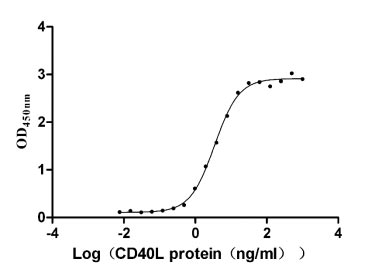
Recombinant Human Tumor necrosis factor receptor superfamily member 5 (CD40), partial (Active)
Express system: Mammalian cell
Species: Homo sapiens (Human)
-
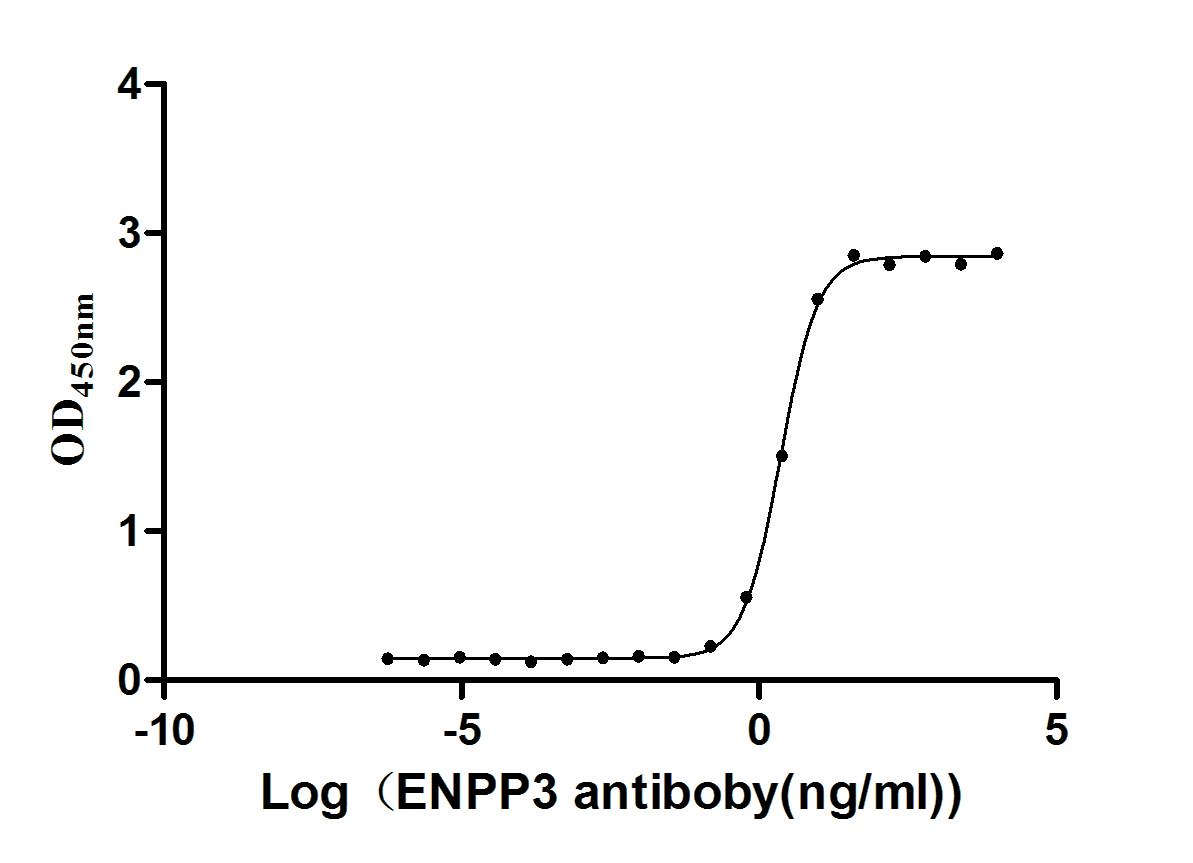
Express system: Mammalian cell
Species: Homo sapiens (Human)
-
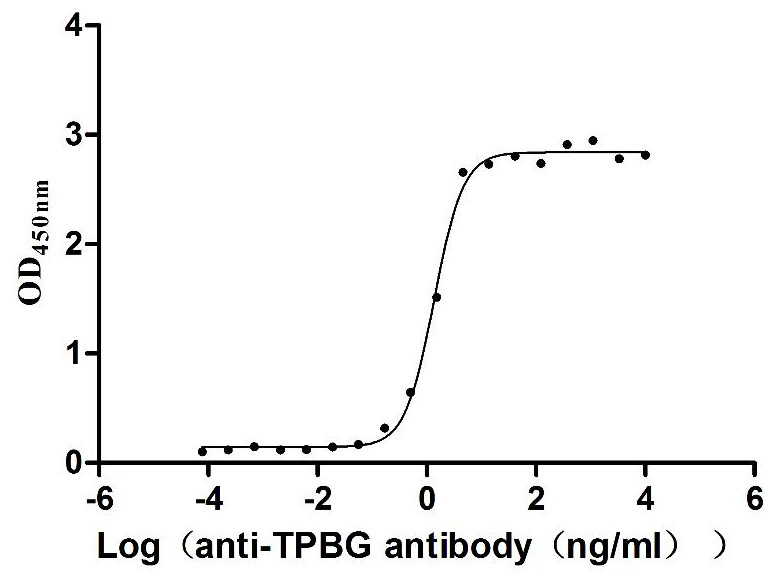
Recombinant Human Trophoblast glycoprotein (TPBG), partial (Active)
Express system: Mammalian cell
Species: Homo sapiens (Human)
-
-AC1.jpg)
Recombinant Human Dickkopf-related protein 1 (DKK1) (Active)
Express system: Mammalian cell
Species: Homo sapiens (Human)
-
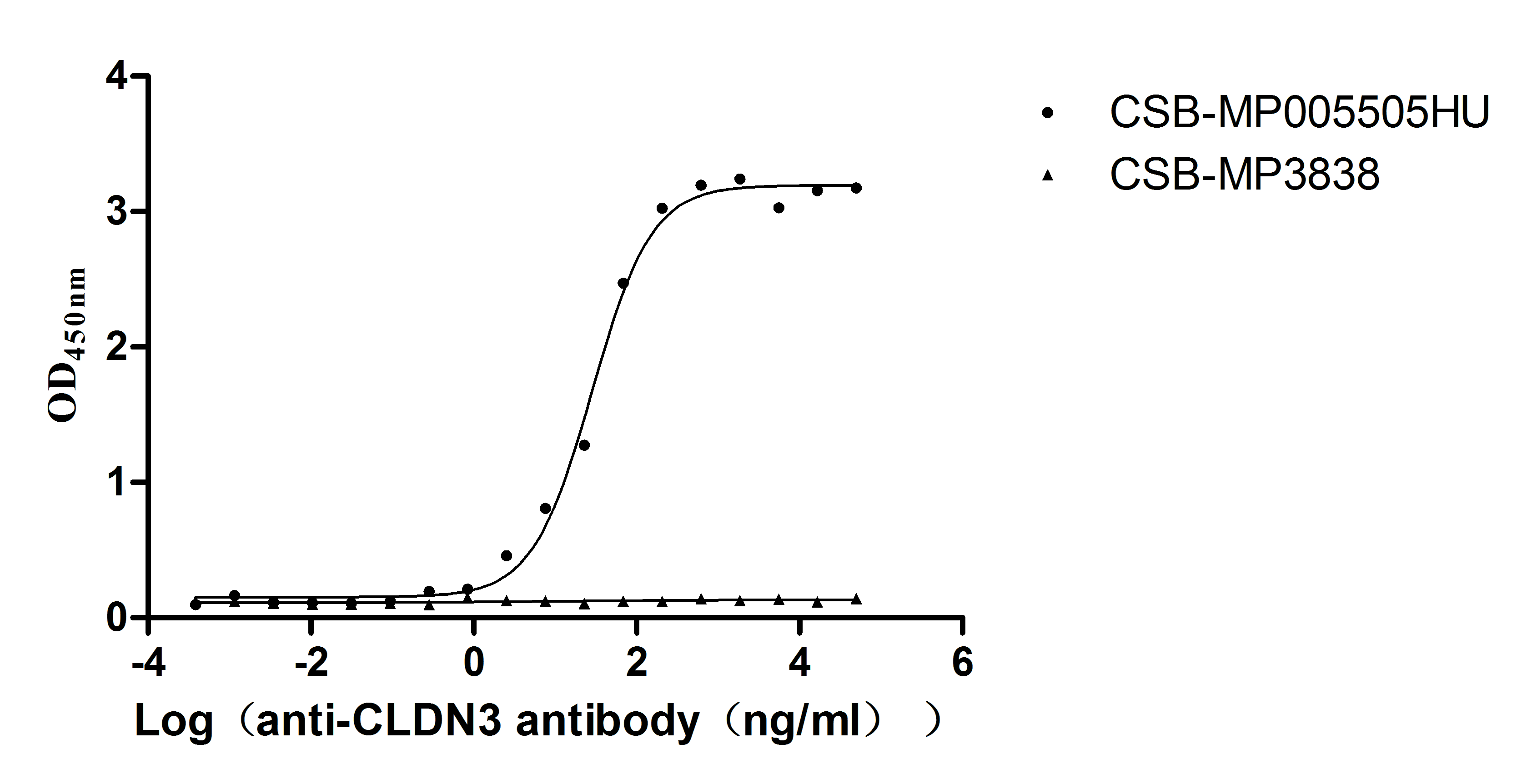
Recombinant Human Claudin-3 (CLDN3)-VLPs (Active)
Express system: Mammalian cell
Species: Homo sapiens (Human)
-
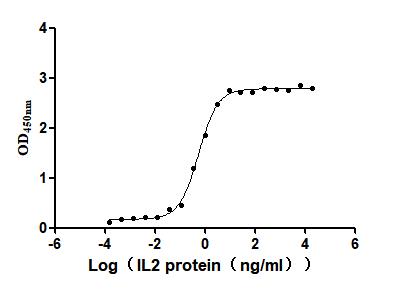
Recombinant Human Interleukin-2 (IL2) (Active)
Express system: Mammalian cell
Species: Homo sapiens (Human)
-
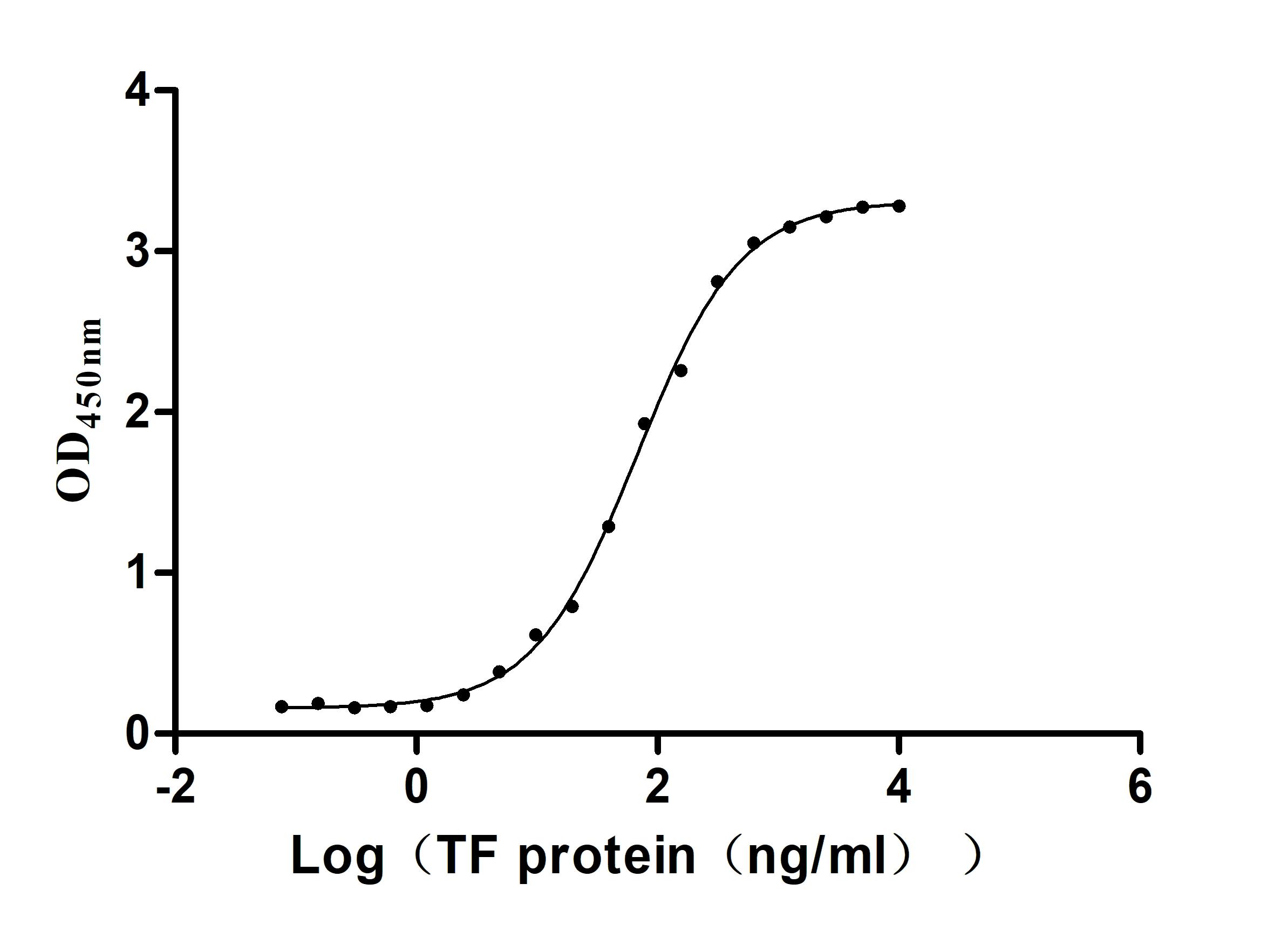
Recombinant Human Serotransferrin(TF) (Active)
Express system: Mammalian cell
Species: Homo sapiens (Human)
-
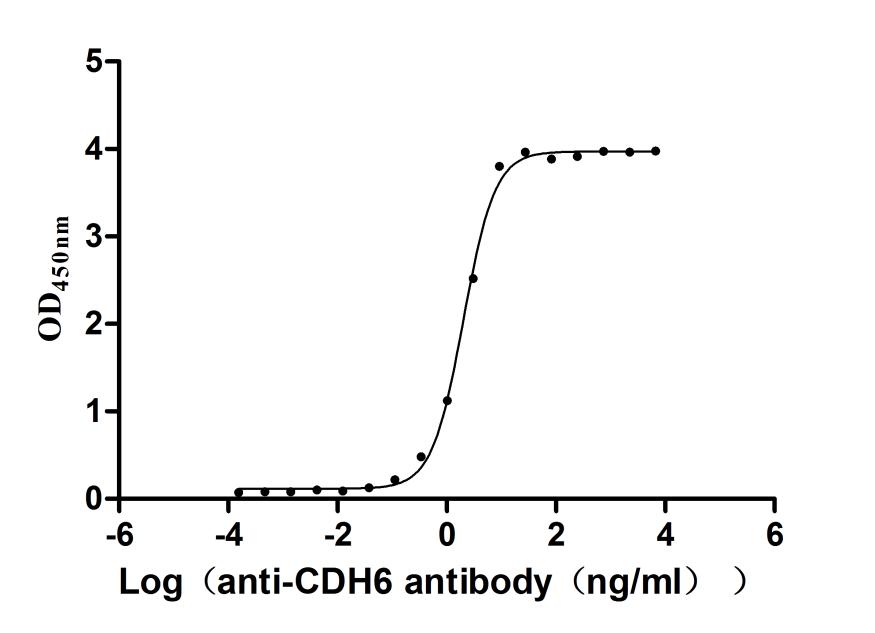
Recombinant Mouse Cadherin-6 (Cdh6), partial (Active)
Express system: Mammalian cell
Species: Mus musculus (Mouse)