
Recombinant Mouse Estrogen-related receptor gamma (Esrrg)
-
中文名稱:小鼠Esrrg重組蛋白
-
貨號:CSB-YP007837MO
-
規格:
-
來源:Yeast
-
其他:
-
中文名稱:小鼠Esrrg重組蛋白
-
貨號:CSB-EP007837MO
-
規格:
-
來源:E.coli
-
其他:
-
中文名稱:小鼠Esrrg重組蛋白
-
貨號:CSB-EP007837MO-B
-
規格:
-
來源:E.coli
-
共軛:Avi-tag Biotinylated
E. coli biotin ligase (BirA) is highly specific in covalently attaching biotin to the 15 amino acid AviTag peptide. This recombinant protein was biotinylated in vivo by AviTag-BirA technology, which method is BriA catalyzes amide linkage between the biotin and the specific lysine of the AviTag.
-
其他:
-
中文名稱:小鼠Esrrg重組蛋白
-
貨號:CSB-BP007837MO
-
規格:
-
來源:Baculovirus
-
其他:
-
中文名稱:小鼠Esrrg重組蛋白
-
貨號:CSB-MP007837MO
-
規格:
-
來源:Mammalian cell
-
其他:
產品詳情
-
純度:>85% (SDS-PAGE)
-
基因名:Esrrg
-
Uniprot No.:
-
別名:Esrrg; Err3; Kiaa0832; Nr3b3Estrogen-related receptor gamma; Estrogen receptor-related protein 3; Nuclear receptor subfamily 3 group B member 3
-
種屬:Mus musculus (Mouse)
-
蛋白長度:Full length protein
-
表達區域:1-458
-
氨基酸序列MDSVELCLPE SFSLHYEEEL LCRMSNKDRH IDSSCSSFIK TEPSSPASLT DSVNHHSPGG SSDASGSYSS TMNGHQNGLD SPPLYPSAPI LGGSGPVRKL YDDCSSTIVE DPQTKCEYML NSMPKRLCLV CGDIASGYHY GVASCEACKA FFKRTIQGNI EYSCPATNEC EITKRRRKSC QACRFMKCLK VGMLKEGVRL DRVRGGRQKY KRRIDAENSP YLNPQLVQPA KKPYNKIVSH LLVAEPEKIY AMPDPTVPDS DIKALTTLCD LADRELVVII GWAKHIPGFS TLSLADQMSL LQSAWMEILI LGVVYRSLSF EDELVYADDY IMDEDQSKLA GLLDLNNAIL QLVKKYKSMK LEKEEFVTLK AIALANSDSM HIEDVEAVQK LQDVLHEALQ DYEAGQHMED PRRAGKMLMT LPLLRQTSTK AVQHFYNIKL EGKVPMHKLF LEMLEAKV
-
蛋白標簽:Tag?type?will?be?determined?during?the?manufacturing?process.
The tag type will be determined during production process. If you have specified tag type, please tell us and we will develop the specified tag preferentially. -
產品提供形式:Lyophilized powder
Note: We will preferentially ship the format that we have in stock, however, if you have any special requirement for the format, please remark your requirement when placing the order, we will prepare according to your demand. -
復溶:We recommend that this vial be briefly centrifuged prior to opening to bring the contents to the bottom. Please reconstitute protein in deionized sterile water to a concentration of 0.1-1.0 mg/mL.We recommend to add 5-50% of glycerol (final concentration) and aliquot for long-term storage at -20℃/-80℃. Our default final concentration of glycerol is 50%. Customers could use it as reference.
-
儲存條件:Store at -20°C/-80°C upon receipt, aliquoting is necessary for mutiple use. Avoid repeated freeze-thaw cycles.
-
保質期:The shelf life is related to many factors, storage state, buffer ingredients, storage temperature and the stability of the protein itself.
Generally, the shelf life of liquid form is 6 months at -20°C/-80°C. The shelf life of lyophilized form is 12 months at -20°C/-80°C. -
貨期:Delivery time may differ from different purchasing way or location, please kindly consult your local distributors for specific delivery time.Note: All of our proteins are default shipped with normal blue ice packs, if you request to ship with dry ice, please communicate with us in advance and extra fees will be charged.
-
注意事項:Repeated freezing and thawing is not recommended. Store working aliquots at 4°C for up to one week.
-
Datasheet :Please contact us to get it.
產品評價

靶點詳情
-
功能:Orphan receptor that acts as transcription activator in the absence of bound ligand. Binds specifically to an estrogen response element and activates reporter genes controlled by estrogen response elements. Induces the expression of PERM1 in the skeletal muscle.
-
基因功能參考文獻:
- Estrogen-related receptor gamma (ERRgamma) overexpression in chondrocytes directly upregulates matrix metalloproteinase (MMP)-3 and MMP13, which are known to play crucial roles in cartilage destruction in osteoarthritis (OA). PMID: 29247173
- MiR-204-5p inhibits myoblast differentiation by targeting MEF2C and ERRgamma. PMID: 29505923
- Loss of ERRgamma in renal epithelial cells Results in Kidney Disease with Cysts. PMID: 29735694
- Muscle ERRgamma over-expression successfully triggered glycolytic-to-oxidative myofiber switch, increased functional mitochondrial content and boosted vascular supply in the db/db mice. PMID: 27220353
- The research findings suggest that estrogen-related receptor gamma (ERRgamma) regulates testicular steroidogenesis, both directly controlling and indirectly fine-tuning the expression of steroidogenic genes. PMID: 28479375
- These findings strongly support a role for ERRgamma in the metabolic alterations that underlie the development of diabetic cardiomyopathy. PMID: 27062900
- our results reveal that ERRgamma, induced via activation of the hepatic CB1 receptor, is a regulator of hepatic FGF21 gene expression and secretion. PMID: 27455076
- Study conclude that O-GlcNAcylation of ERRgamma serves as a major signal to promote hepatic gluconeogenesis. PMID: 27335230
- Mice deficient in beta cell-specific ERRgamma expression are glucose intolerant and fail to secrete insulin in response to a glucose challenge. PMID: 27076077
- mediates metabolic transition, which is required for induced pluripotency PMID: 25865501
- ERRgamma plays a key role in vascular calcification by upregulating the BMP2 signaling pathway. PMID: 26404484
- Mice lacking neuronal ERRgamma in cerebral cortex and hippocampus exhibit defects in spatial learning and memory. PMID: 25863252
- These results suggest that ERRgamma is a major contributor to insulin action in maintaining hepatic glucose homeostasis. PMID: 25205222
- ERRgamma is a sexdependent and RUNX2-dependent negative regulator of osteoblast differentiation, and that its regulatory activity may also be differentiation stage-dependent. PMID: 25313644
- Orphan nuclear receptor Errgamma induces C-reactive protein gene expression through induction of ER-bound Bzip transmembrane transcription factor CREBH. PMID: 24466039
- Cartilage-specific overexpression of ERRgamma results in chondrodysplasia and reduced chondrocyte proliferation. PMID: 24349082
- These findings demonstrate a novel ERRgamma/GATA4 signal cascade in the development of cardiac hypertrophy. PMID: 24083978
- Esrrg modulates the intramacrophage proliferation of S. typhimurium by altering host iron homeostasis. PMID: 24658075
- ERRgamma was preferentially expressed in brown compared to white fat depots, and ERRgamma was induced during cold-induced browning of subcutaneous white adipose tissue and brown adipogenesis PMID: 23404793
- This study showed that the ERRgamma-dependent metabolic and angiogenic gene program is defective in Duchenne muscular dystrophy, and its restoration is a potential strategy for treating muscular dystrophy. PMID: 23781095
- plays a role in maintenance of hearing in both humans and mice. PMID: 23540940
- Estrogen-related receptor gamma controls hepatic CB1 receptor-mediated CYP2E1 expression and oxidative liver injury by alcohol. PMID: 23023167
- Type I muscle fiber proportion is increased via the stimulatory actions of ERRG on the expression of miR-499 and miR-208b. PMID: 23676496
- results suggest that loss of ERRgamma causes metabolic defects and oxidative stress that impair myotube formation through activation of skeletal muscle atrophy pathways PMID: 23038752
- Orphan nuclear receptor estrogen-related receptor gamma (ERRgamma) is key regulator of hepatic gluconeogenesis PMID: 22549789
- Esrrg is a novel lupus susceptibility gene that regulates the function and activation of CD4+ T cells through their mitochondrial metabolism. PMID: 22711888
- ERRgamma is a hypoxia-independent inducer of neoangiogenesis that can promote reparative revascularization in ischemic skeletal muscle. PMID: 22415017
- Estrogen-related receptor gamma (ERRgamma) is a novel transcriptional regulator of phosphatidic acid phosphatase, LIPIN1, and inhibits hepatic insulin signaling PMID: 21911493
- ERR gamma genetically activates the energy sensor AMPK in mediating the metabovascular changes in ERRGO mice. PMID: 21356518
- Esrrg is required for early branching events of the ureteric duct that occur prior to the onset of nephrogenesis. PMID: 21138943
- ERRgamma plays an important role in causing a shift toward slow twitch muscle type and, concomitantly, a greater capacity for endurance exercise. PMID: 20418374
- Renal, gastric, and cardiac tissues subjected to genomic expression analysis in perinatal ERRgamma null mice reveal dysregulation of genes involved in ion transport processes. PMID: 19965931
- Transcriptional activation by ERR3 can be ligand-independent. PMID: 11864604
- Domains of ERRgamma that mediate homodimerization and interaction with factors stimulating DNA binding were characterized. PMID: 12180985
- results provide detailed molecular insight into the conformational changes occurring upon binding of synthetic antagonists to the constitutive orphan receptor estrogen-related receptor (ERR) gamma PMID: 15161930
- work reveals a novel mechanism that negatively regulates the transcriptional function of ERRgamma by GNL3L through coactivator competition PMID: 17623774
- The results suggest that ERRgamma positively regulate the adipocyte differentiation with modulating the expression of various adipogenesis-related genes. PMID: 18809516
- ERRgamma is a novel negative regulator of osteoblast differentiation and bone formation via its regulation of Runx2 transactivity. PMID: 19324883
- Err3 is expressed at high levels in gamma but not alpha motor neurons, whereas the neuronal DNA binding protein NeuN marks alpha but not gamma motor neurons. PMID: 19651609
顯示更多
收起更多
-
亞細胞定位:Nucleus.
-
蛋白家族:Nuclear hormone receptor family, NR3 subfamily
-
組織特異性:Highly expressed in the heart, brain and kidney and low expression in the liver.
-
數據庫鏈接:
Most popular with customers
-
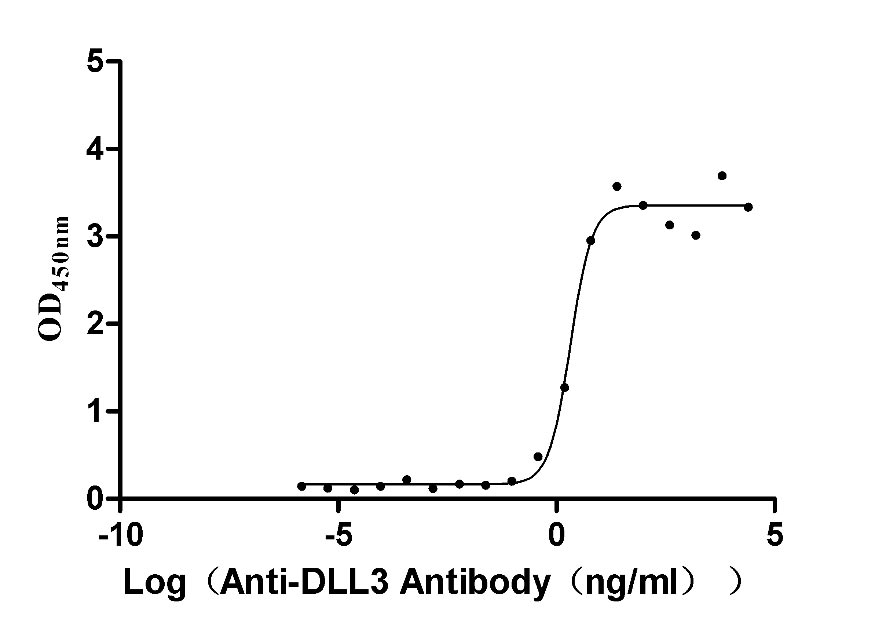
Recombinant Macaca fascicularis Delta-like protein 3 (DLL3), partial (Active)
Express system: Mammalian cell
Species: Macaca fascicularis (Crab-eating macaque) (Cynomolgus monkey)
-
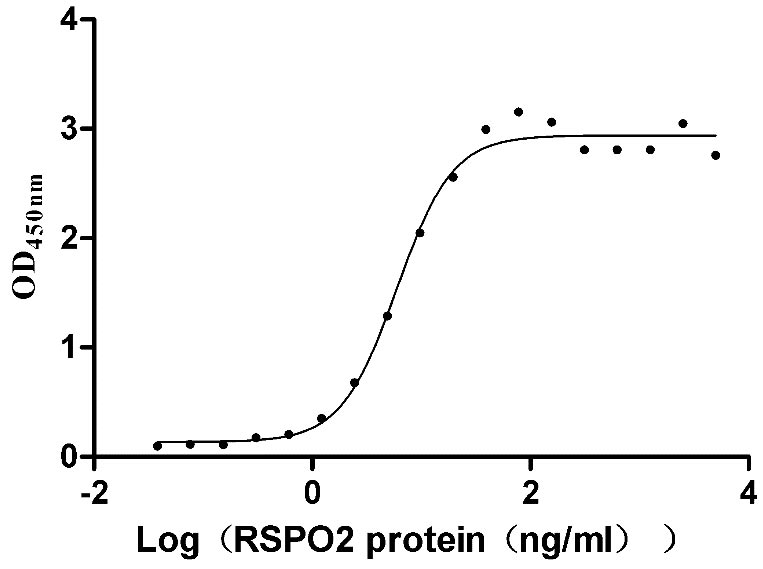
Recombinant Human E3 ubiquitin-protein ligase ZNRF3 (ZNRF3), partial (Active)
Express system: Mammalian cell
Species: Homo sapiens (Human)